


Sheila Kennedy is an American actress whose career has stretched across film, television, Broadway, regional theatre, and acting coaching. Best known to millions of television viewers as Benny Lopez, George Lopez’s mother, on the sitcom George Lopez, she built her career long before that series premiered in 2002.
Born Aurabela Moreno on November 1, 1949, in Dallas, Texas, Moreno studied theatre at Southern Methodist University before continuing her training at the Pacific Conservatory of the Performing Arts. Her professional screen career began in the 1970s, including appearances in three films directed by acclaimed filmmaker Robert Altman.
Who Is Sheila Kennedy?
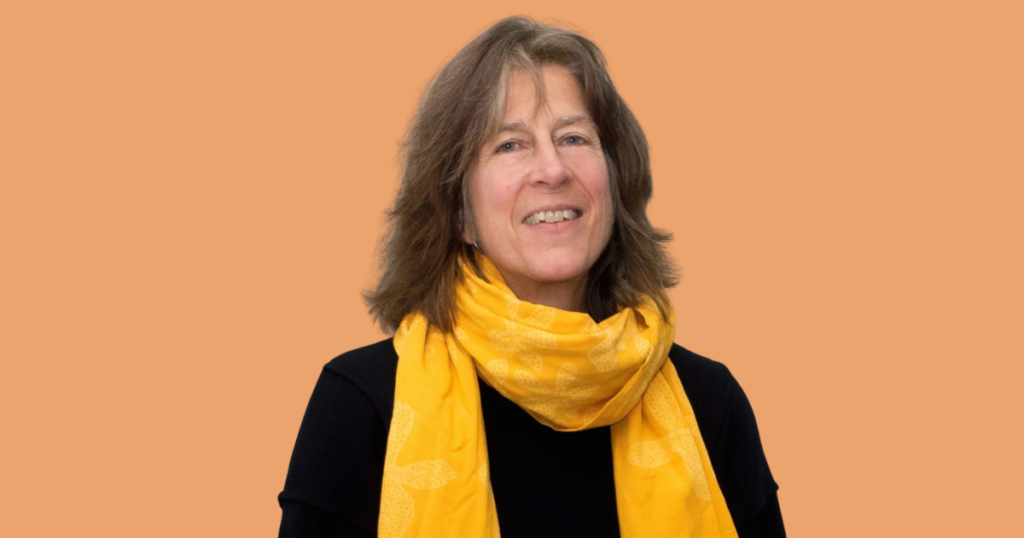
Sheila Kennedy is an American architect, educator and innovator whose career sits at the intersection of architecture, material research, renewable energy, digital technology and public infrastructure. She is a professor at the Massachusetts Institute of Technology (MIT) and a founding principal of Kennedy & Violich Architecture, commonly associated with KVA Matx.
Her work includes experimental projects involving photovoltaic textiles, adaptable buildings, public waterfronts, digitally fabricated brickwork, botanical conservatories and regenerative timber structures.
KVA describes Kennedy as an architect whose work explores renewable materials and resilient “soft” infrastructure for networked cities and urbanizing regions.
How can architecture respond to technological change, environmental pressure and new social needs without becoming detached from materials, people and place?
Quick Facts About Sheila Kennedy
| Detail | Information |
|---|---|
| Full name | Sheila Kennedy |
| Profession | Architect, educator, innovator, researcher |
| Nationality | American |
| Known for | Sustainable architecture, material innovation, digital fabrication, resilient infrastructure |
| Current academic role | Professor of Architecture at MIT |
| Professional firm | Kennedy & Violich Architecture (KVA) / KVA Matx |
| Professional designation | FAIA |
| Education | Wesleyan University; École Nationale Supérieure des Beaux-Arts, Paris; Harvard Graduate School of Design |
| Harvard degree | Master of Architecture, 1985 |
| Major academic role | Former Associate Professor and Director of the M.Arch II Program at Harvard GSD |
| Architecture firm founded | Kennedy & Violich Architecture, 1990, according to MIT and professional biographies |
| Major research platform | MATx |
| Major projects | Portable Light, Soft House, RiverFIRST, Tozzer Anthropology Building, Global Flora, TREE FORM |
| Major recognition | Berkeley-Rupp Prize, Architectural Record Design Innovator Award, Tech Award, MIT Bose Innovation Fellowship and other honors |
| Husband/professional partner | J. Frano Violich |
| Birth date | Not reliably established in the authoritative sources reviewed |
| Age | Not reliably established |
| Birthplace | Not reliably established |
| Net worth | No reliable public figure established |
| Official professional presence | KVA Matx and MIT Architecture |
MIT currently lists Sheila Kennedy as a Professor in its Department of Architecture,
Also Read: noah-presgrove
Sheila Kennedy Early Life and Family
Public information about Kennedy’s childhood is relatively limited compared with documentation of her professional career.
One well-documented family connection is her father, Eugene Patrick Kennedy, a prominent biochemist. A memorial published through the National Library of Medicine identifies Sheila Kennedy among his daughters and describes her as an MIT architecture professor.
The public record does not establish such a conclusion.
She did not begin with a conventional undergraduate architecture degree.
- Materials science
- Digital technology
- Energy
- Environmental systems
- Manufacturing
- Urbanism
- Public infrastructure
- Education
- Ecology
Also Read: timothy-mowry
Sheila Kennedy Education
Wesleyan University
Kennedy earned a bachelor’s degree in history, philosophy and literature through the College of Letters at Wesleyan University.
This liberal-arts foundation became an important part of her professional trajectory.
The Boston Society for Architecture confirms her Wesleyan education and identifies her undergraduate field as history, philosophy and literature.
Harvard Graduate School of Design
Kennedy went on to the Harvard Graduate School of Design, where she earned a Master of Architecture in 1985.
She graduated with Distinction, which the Boston Society for Architecture describes as the school’s highest academic honor.
Her Harvard education became a major bridge between academic architecture and professional practice.
Sheila Kennedy Architecture Career
Early Professional Development
Kennedy’s career developed around a combination of architectural practice, research and teaching.
Founding Kennedy & Violich Architecture
In 1990, Kennedy founded Kennedy & Violich Architecture (KVA) in partnership with J. Frano Violich. The Boston Society for Architecture and other institutional biographies identify 1990 as the firm’s founding year.
KVA became the professional environment through which Kennedy could combine conventional architectural commissions with experimental research.
The practice developed a reputation for interdisciplinary work involving:
- Architecture
- Material systems
- Digital fabrication
- Energy
- Urban infrastructure
- Public projects
- Sustainable design
- Experimental technology
The two have worked together as founding principals of KVA.
Also Read: catherine-missal
Sheila Kennedy at Harvard
Kennedy’s career was not limited to professional practice.
At the Harvard Graduate School of Design, she served as an Associate Professor and was Director of the M.Arch II Program from 1991 to 1995.
What Is Sheila Kennedy?
KVA Matx is the material research division associated with Kennedy & Violich Architecture.
Kennedy established MATx in 2000 as a platform for exploring the relationship between architecture, materials, technology and emerging public needs.
KVA describes MATx as working with business leaders, cultural institutions and public agencies to develop applications for renewable materials and resilient “soft” infrastructure.
The significance of MATx is that it expands the role of an architecture practice.
- Renewable materials
- Photovoltaic textiles
- Digital fabrication
- Solid-state lighting
- Intelligent building systems
- Energy infrastructure
- Flexible architectural components
- Material prototyping
- Networked urban systems
One example is Convia, a MATx research project developed with Herman Miller and Applied Minds.
Also Read:marilou-york
Sheila Kennedy Design Philosophy
Soft Infrastructure
Traditional infrastructure often suggests hard, fixed systems:
- Roads
- Pipes
- Bridges
- Electrical networks
- Permanent structures
Kennedy’s research explores infrastructure that can be more flexible, responsive, distributed and integrated with everyday life.
This may involve textiles, energy systems, sensors, public space, digital networks or ecological processes.
Materials as Active Design Tools
A material can influence:
- Energy production
- Building performance
- User interaction
- Manufacturing
- Adaptability
- Carbon impact
- Construction methods
Sustainability as a System
Her work considers relationships between:
materials + energy + ecology + technology + people + infrastructure
That systems-oriented approach helps explain the range of her projects, from portable solar lighting to urban riverfront planning and botanical conservatories.
Sheila Kennedy Major Projects
Portable Light
Portable Light is one of Sheila Kennedy best-known research projects.
Developed through KVA Matx, the project explores portable solar energy and lighting using flexible materials.
The technology combines:
- Photovoltaic materials
- Textiles
- Electronics
- Solid-state lighting
- Portable forms
- Local craft and manufacturing
One version, the Portable Light FLAP bag, incorporated energy-harvesting textiles into a messenger-bag form.
KVA reports that Portable Light has served Indigenous communities in Mexico’s Sierra Madre and that related initiatives have been developed in other parts of the world.
The importance of Portable Light extends beyond the object itself.
It challenges the assumption that energy infrastructure must always be centralized, rigid and permanently installed.
Soft House
KVA identifies Sheila Kennedy and Frano Violich as principals for the Hamburg project.
The Soft House system incorporates:
- Flexible photovoltaic textiles
- Low-voltage power
- Digitally fabricated engineered-wood structures
- Parametric design
- Adaptable interior arrangements
- Mobile textile elements
The project’s significance lies in its attempt to merge energy generation, architecture and everyday domestic life.
KVA continues to describe Soft House as a research project, with prototypes developed through its MATx work.
Soft Cities
The project investigated how energy-generating textiles could operate between individual buildings and larger urban infrastructure.
KVA describes research involving the Casa Burguesa district of Porto, Portugal, where the system explored the potential for textile-based energy generation and urban adaptation.
Her research asks how architectural systems can operate across neighborhoods and cities.
RiverFIRST Minneapolis
RiverFIRST was a major urban design competition project focused on the Mississippi River waterfront in Minneapolis.
The project explored:
- Flood mitigation
- Habitat restoration
- Water quality
- Public space
- River access
- Ecological infrastructure
- Renewable energy
- Digital public information
East 34th Street Public Ferry Terminal
The project demonstrated how digital fabrication and lightweight construction could be used in public infrastructure.
Its design incorporated:
- A lightweight structural system
- Translucent tensile elements
- Digitally fabricated components
- Environmental sensing
- Public transportation infrastructure
Sheila Kennedy Chrysanthemum Building
The project combines residential space with an approach focused on:
- Adaptability
- Low-carbon construction
- Renewable materials
- Urban infill
- Digital fabrication
- Energy performance
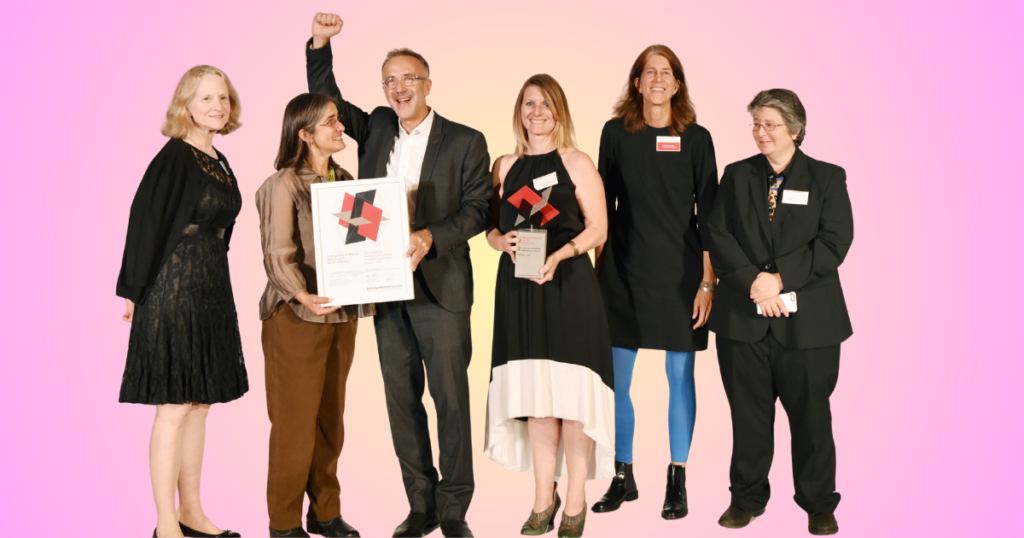
The building received recognition through the Holcim Awards program.
Its importance lies partly in showing how sustainability can be addressed at a small urban scale.
Tozzer Anthropology Building
The Tozzer Anthropology Building at Harvard University is one of Kennedy’s most technically distinctive built projects.
Completed in 2014, the project involved the renovation and expansion of Harvard’s anthropology facilities in Cambridge, Massachusetts.
One of its most notable features is its digitally designed brickwork.
KVA and MATx used computational methods to calculate the geometry and placement of individual bricks, allowing a traditional material to become part of a highly controlled contemporary structural and architectural system.
traditional material + computation + craftsmanship + sustainability + architectural experimentation.
Global Flora at Wellesley College
Global Flora is a botanical conservatory at Wellesley College in Massachusetts.
The project connects architecture with plant life, environmental systems and public education.
Its design addresses:
- Botanical collections
- Environmental control
- Renewable energy
- Water management
- Passive design
- Ecological education
- Sustainable construction
KVA’s broader portfolio identifies Global Flora as an important project in its education and sustainability work.
TREE FORM
Sheila Kennedy Recent Direction in Architecture
The project moves her research toward regenerative architecture and the use of wood derived from living forest systems.
TREE FORM involves collaboration between KVA Matx, MIT Digital Structures and WholeTrees Structures.
Its research combines:
- 3D scanning
- Digital twins
- Computational analysis
- Structural optimization
- Timber
- Forest health
- Digital fabrication
- Circular material systems
The project was presented as part of the 2025 Venice Architecture Biennale, linking Kennedy’s long-standing interest in material innovation with contemporary questions about carbon, forests and regenerative construction.
It is increasingly concerned with where materials come from, how they are processed, how forests are managed and how buildings can participate in regenerative systems.
Sheila Kennedy at MIT
Kennedy’s relationship with MIT is one of the defining elements of her professional identity.
MIT currently lists her as a Professor in the Department of Architecture.
Her MIT career allows her to continue combining:
- Architectural practice
- Research
- Teaching
- Material experimentatio
- Digital technology
- Climate-responsive design
- Public infrastructure
Sheila Kennedy and Frano Violich
The two founded Kennedy & Violich Architecture together and have developed KVA as an interdisciplinary practice.
Their roles within individual projects can vary. Current KVA project records sometimes identify Kennedy as principal in charge or design principal and Violich as managing or consulting principal.
KVA’s leadership page identifies Kennedy as a Founding Principal and Violich as a Founding Principal.
Sheila Kennedy Awards and Recognition
Kennedy has received recognition from major architecture, design and sustainability organizations.
Architectural Record Design Innovator Award
This honor recognized her innovative approach to architecture and design.
It reflects the broader importance of her work in connecting architectural practice with materials, technology and public needs.
Berkeley-Rupp Prize
In 2014, Kennedy received the Berkeley-Rupp Prize and Architecture Professorship from the UC Berkeley College of Environmental Design.
The award recognizes significant contributions involving architecture, gender equity and sustainability.
Tech Award
Portable Light received major recognition through the Tech Awards, highlighting its combination of technology and social impact.
Other Recognition
- Fast Company’s Masters of Design
- Holcim Awards
- American Architecture Prize
- AIA/BSA awards
- Brick Industry Association recognition
- Architecture MasterPrize-related recognition
- International exhibitions and biennales
Sheila Kennedy Publications and Intellectual Work
Kennedy’s influence extends beyond buildings.
Her work has appeared in and contributed to publications dealing with:
- Material innovation
- Architecture and technology
- Urban infrastructure
- Sustainable design
- Digital culture
- Educational environments
One important publication associated with her work is Material Misuse: Kennedy & Violich Architecture, which examined unconventional uses of ordinary architectural materials.
Media Presence and Public Speaking Sheila Kennedy
Kennedy has maintained a substantial public profile through architecture, technology and design discussions.
- NPR
- BBC World News
- CBS
- CNN
- Wired
- The Economist
- The Wall Street Journal
- The New York Times
- Discovery Channel
This public-facing role has helped extend her influence beyond architecture studios and classrooms.
Sheila Kennedy Approach to Leadership and Collaboration
Kennedy’s career suggests a leadership style based heavily on interdisciplinary collaboration and experimentation.
- Engineers
- Material scientists
- Software specialists
- Manufacturers
- Public agencies
- Researchers
- Students
- Environmental experts
- Artists and designers
A key career lesson
One of the strongest lessons from Kennedy’s career is that architectural innovation does not necessarily come from abandoning traditional materials or methods. It can come from combining old and new systems in unexpected ways.
The recurring strategy is not “technology for technology’s sake.”
It is technology used to rethink what materials and architecture can do.
Sheila Kennedy Influence on Sustainable Architecture
Her work has addressed sustainability through several different scales.
Object scale
Portable Light explores small, mobile energy systems.
Building scale
Soft House and Chrysanthemum Building explore renewable energy, adaptable architecture and low-carbon construction.
Institutional scale
Global Flora examines ecological systems and environmental performance.
Urban scale
RiverFIRST explores water, habitat and public infrastructure.
Material and forest scale
TREE FORM investigates timber, forest health and regenerative construction.
Early sustainable design often focused heavily on energy efficiency. Kennedy’s work increasingly treats sustainability as a network of material, ecological, social and technological relationships.
Marriage
Kennedy is publicly associated with J. Frano Violich, her husband and long-term professional collaborator.
Together they founded Kennedy & Violich Architecture.
Sheila Kennedy Parents and siblings
Her father was Eugene Patrick Kennedy, the biochemist.
Children
No reliable authoritative source reviewed for this biography establishes publicly confirmed information about children.
Birth date and age
Kennedy’s exact birth date and current age are not reliably established in the authoritative sources used for this biography.
Sheila Kennedy Net Worth
There is no reliable, authoritative public figure for Sheila Kennedy personal net worth.
Kennedy’s professional status as an architect, professor and founding principal of an architecture practice does not provide enough evidence to calculate her personal wealth.
Sheila Kennedy & Violich Architecture
KVA is the principal architectural practice associated with Kennedy.
The firm works across architecture, urbanism, material research, digital fabrication and sustainable design.
KVA Matx
MATx is the firm’s interdisciplinary research division.
Its work extends into:
- Renewable materials
- Energy systems
- Digital fabrication
- Smart infrastructure
- Material prototyping
- Urban networks
Sheila Kennedy Massachusetts Institute of Technology
MIT is Kennedy’s primary academic institution and a major platform for her teaching and research.
Philanthropy and Social Impact Sheila Kennedy
Kennedy is not primarily known for operating a conventional personal foundation or charity.
Portable Light is the clearest example. The project was developed around access to portable clean energy and lighting and has been used in communities where conventional electrical infrastructure is limited.
Other projects address:
- Public waterfronts
- Environmental restoration
- Affordable urban housing
- Sustainable construction
- Educational buildings
- Ecological infrastructure
- Climate adaptation
Challenges and Professional Questions
Kennedy’s career has not followed a simple path.
Her work often operates between established professional categories:
- Architecture and engineering
- Design and science
- Building and infrastructure
- Technology and craft
- Research and practice
- Human needs and ecological systems
The public record reviewed for this biography does not establish a major personal legal controversy or verified scandal involving Kennedy. Professional criticism of architecture should not be confused with personal controversy.
Interesting Facts About Sheila Kennedy
She studied architecture in Paris
Her education included architecture studies at the École Nationale Supérieure des Beaux-Arts.
She graduated from Harvard GSD with Distinction
Kennedy earned her MArch in 1985 and received the SOM National Traveling Fellowship.
MATx was established in 2000
The research platform became an important vehicle for her work in materials and technology.
Her work can turn textiles into energy infrastructure
Portable Light and Soft House demonstrate how textiles can become part of energy and architectural systems.
She has used computation to rethink brick
The Tozzer Anthropology Building demonstrates how digitally calculated geometry can work with traditional brick constructioShe has worked on riverfront ecology
RiverFIRST shows her interest in water, habitat, public space and infrastructure.
Her architecture includes botanical research
Global Flora connects architecture with living plant collections and environmental systems.
Her recent research looks to trees
TREE FORM investigates how tree structures, digital modeling and timber can inform lower-carbon architecture.
Sheila Kennedy Legacy and Influence
Her importance lies in several overlapping areas.
Sustainable design
Her projects have explored renewable energy, ecological systems, low-carbon materials and resilient infrastructure.
Material innovation
From photovoltaic textiles to digitally fabricated brickwork and timber systems, her work repeatedly challenges conventional assumptions about materials.
Architectural education
Her positions at Harvard and MIT have allowed these ideas to reach students and younger designers.
Women’s leadership in architecture
The Berkeley-Rupp Prize placed her career within a broader discussion about women’s leadership, sustainability and architectural practice.
Sheila Kennedy Career in Perspective
Looking at Kennedy’s career chronologically reveals a clear progression.
Portable Light asked how energy could become mobile.
Soft House asked how energy-producing textiles could become architecture.
RiverFIRST asked how ecological processes could become urban infrastructure.
Tozzer asked how computation could transform traditional brick construction.
Global Flora asked how architecture could support living botanical systems.
TREE FORM asks how digital design and timber can connect architecture with forest health and regenerative material systems.
That progression is perhaps the clearest way to understand why Sheila Kennedy matters.
She has not simply pursued sustainable architecture as a style. She has repeatedly treated architecture as a research field in which materials, technology, ecology and public life can be redesigned together.
FAQs
Sheila Kennedy is an American architect, educator and innovator who is a Professor of Architecture at MIT and a founding principal of Kennedy & Violich Architecture/KVA Matx. Her work focuses on material innovation, sustainable architecture, digital fabrication, renewable energy and resilient infrastructure.
She is best known for interdisciplinary architectural research involving materials, technology, renewable energy and resilient infrastructure. Major projects associated with her include Portable Light, Soft House, RiverFIRST, the Tozzer Anthropology Building, Global Flora and TREE FORM.
Kennedy works academically at MIT, where she is a Professor in the Department of Architecture. Professionally, she is a founding principal of Kennedy & Violich Architecture/KVA Matx.
She earned her bachelor’s degree in history, philosophy and literature from Wesleyan University, studied architecture in Paris at the École Nationale Supérieure des Beaux-Arts, and earned a Master of Architecture from Harvard Graduate School of Design in 1985.
Yes. Sheila Kennedy is publicly associated with J. Frano Violich, her husband and long-term architectural collaborator. They founded Kennedy & Violich Architecture together.
KVA Matx is the material research division associated with Kennedy & Violich Architecture. It explores renewable materials, digital technologies, energy systems and resilient infrastructure in collaboration with industry, cultural institutions and public agencies.
Portable Light is a KVA Matx research project that uses flexible photovoltaic materials, textiles and lighting technology to create portable energy and lighting systems. KVA reports that the project has served Indigenous communities in Mexico and has expanded into other regions.
Soft House is a KVA project that combines architecture with energy-harvesting textiles, adaptable interior systems and digitally fabricated structures. A major version was developed in Hamburg, Germany, through the International Building Exhibition.
Her exact age cannot be reliably stated from the authoritative public sources reviewed.
Her personal net worth is not reliably disclosed in authoritative public sources. Online estimates should not be treated as verified financial facts.
Her work emphasizes material experimentation, sustainability, digital fabrication, renewable energy, resilient infrastructure and interdisciplinary collaboration. A recurring idea is that architecture can become more flexible and responsive by combining physical materials with digital and ecological systems.
Conclusio
Sheila Kennedy has built a career around expanding the boundaries of what architecture can do.
From her humanities education at Wesleyan University and architectural studies in Paris to her Harvard training, teaching career and leadership at Kennedy & Violich Architecture, her professional path has consistently crossed disciplinary boundaries.
At MIT, where she is a Professor of Architecture, she continues to combine teaching, research and practice. Through KVA Matx, she has explored materials and technologies that can change the relationship between buildings, energy, cities and ecological systems.
Portable Light turned flexible textiles into a platform for portable clean energy. Soft House explored energy-producing architectural textiles. RiverFIRST treated the riverfront as ecological and civic infrastructure. Tozzer combined traditional brick with computational design. Global Flora connected architecture with living botanical systems. And TREE FORM extends her research into timber, digital fabrication, forest health and regenerative construction.
Kennedy repeatedly asks how familiar materials, technologies and infrastructures might be reorganized to respond to changing environmental and public needs.